Pages

Monday, 10 January 2011

Linux Unleashed (2011)

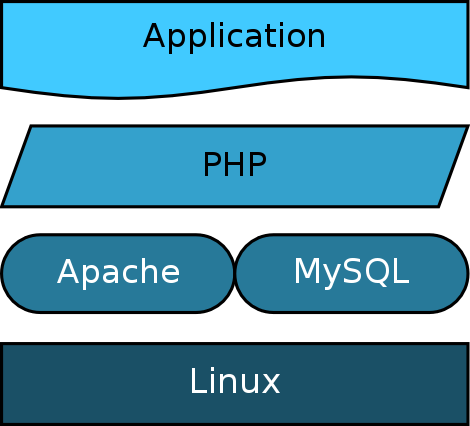
Over a decade ago, the landscape of open source was predominantly GNU/Linux with Mozilla and the Apache foundation. Teamed up with MySQL, the server scape was slowly assimilated. The Desktop was young with Slackware, Debian, Redhat, Mandrake making early in-roads. Few saw Linux as a solution for the desktop where usability translated to simplicity. Hackers (programmers), sysadmins adopted GNU/Linux in whatever form it was available. At the same time, IBM was demonstrating Linux on its mainframes and packing it onto a wristwatch. They had proven that it was practically scalable. The impact at that time was subtle, but a revolution had begun.

In the early days of GNU/Linux, there were frequent comparisons of Linux with Microsoft's Windows and Mac OS (many serving as flame-bait in mailing lists and forums.) Computing devices were not yet commodity and the OS/System Software space was presumed to be an oligopoly. The "OS" was seen as a product, an end in itself, rather than the means to an application (which is easier from today's perspective.) To be fair today, Linux does not have a single perspective (or personality) to project it as a 'de facto' desktop OS alternative. Ubuntu, Knoppix, Linux Mint, Arch, CentOS, Fedora, OpenSuSE and the list goes on.

I remember a discussion in 2001 with my then CEO (Codito), Harshad Pathak. We were a group of hackers trying to define data abstraction, data hiding and data encapsulation. He came up with lines of wisdom, "I don't care what Operating System my Phone is running as long as I can make calls and use it for texting. Embedded Linux, Windows CE - it really doesn't matter." As techies, to us, the OS was sacred, and that transformed the discussion into an argument. An Operating System must facilitate the user to accomplish something, which could be done only through an application or service or a mix of both.


Today, we are precisely in the scenario where the GNU/Linux ecosystem has facilitated end-user productivity through applications, platforms and cohesive technology. Google uses data centres powered by the GNU/Linux ecosystem. Android derives from a Linux kernel. Chrome-OS derives from a Linux kernel. Facebook runs scalable servers powered by GNU/Linux. Desktop options powered by GNU/Linux are innumerable as this infographic reveals. Alternate OS platforms including Sun (now Oracle)'s OpenSolaris, OpenStorage, BSD's contributions as FreeBSD (forked as Darwin became a part of Mac OS), OpenBSD and NetBSD offer a much larger palette to choose from.

Android users are clearly using a phone, empowered with applications and web services from google. The Internet has many businesses providing services in a SaaS model, a good number of them powered by the ongoing Open Source revolution. Business models have undergone radical changes. Semiconductor companies (Intel, AMD, ARM, TI, FreeScale - to name a few) have gone out of the way to ensure System Software (compiler, OS) level support for new Silicon solutions through the Open Source Community. As this has gradually happened, there is a perceived reduction in solution costs that have been passed on to the end user. The spectrum of smart-phones and tablets at CES 2011 was more than proof of how semiconductor majors worked on reducing time-to-market and system-software costs.

Businesses are increasingly adapting and learning to use community source (rather than roll their own code for everything,) wherever it gives them a significant advantage. The businesses having understood the potential, have also begun to reciprocate to the community. It's happening right now, almost oblivious to the glitz and glamour of a Consumer gadget show or a Technology forum.
Proprietary stand-alone platforms are quickly revising and re-inventing. To name a few, Microsoft Live, Microsoft Azure have been Microsoft's answer to the changing technology scape. Rumour mills suggest Apple Sabertooth could be Apple's answer to the change.

Ultimately, what began as the GNU revolution, and then the GNU/Linux revolution, to a full-fledged ecosystem expanding with options as new players joined has changed Information Technology irreversibly. 'The Cloud' is often compared with earlier ideas proposing 'Network Computers', later 'Network Computing.' Yet, the cloud solutions available rely on the evolved Open Source ecosystem. Community Source / Open Source has finally emerged as part of the change and catalyst to the change. The entire system has evolved without serving goals or targets of its own original projects by allowing itself and therefore impact, goal and user-base to change. The business model of the Open Internet Venture is here to stay. Corporate Entities and Governments are also embracing Open Source (WSJ).

Friday, 31 December 2010

Wikileaks, Censorship and Privacy

Until recently I was under the assumption that "the right to privacy" was granted as part of Constitutional rights to a citizen. On further reading, however, I have found that explicit references to "the right to privacy" of an individual (or an entity) do not exist [ ref: legalserviceindia ] in the Indian Constitution. Upon web-trotting, I also found that the constitution of the "United States of America" also has no explicit reference [ ref: usconstitution.net ] to "the right to privacy." Interpretations of the Constitution, and therefore in terms of law, "the right to live" is assumed to include "the right to privacy."

In the interest of good governance, the public have "the right to information." In India, this is empowered by an act ( official manuscript ) passed by the parliament (in 2005.) For USA, the "Freedom of Information Act" (FOIA) passed in 1966 provides access to privileged information. Such acts provide a legal, authoritative and official channel to citizens enabling them receive information on request. In sharp contrast, governments also have an Official Secrets Act ( references ) which aid in limited circulation and censorship of sensitive information, broadly in the interest of governance and security. Interestingly, the United States of America does not have an Official Secrets Act, though the Espionage Act (ref: cornell) intends to secure military and defense information.

The Freedom of Press (ref: commentary, India ) is also empowered by the first amendment in the USA, while it is an act in India. Simplifying, freedom of press in modern society is allowed so long as the interests of the government and public security in a broad sense remain unaffected. Freedom of Information ( reference, pdf ) is upheld as an Internationally protected Human Right by the United Nations. The objective behind freedom of information is to ensure good governance. The United Nations hopes that freedom of information will help curb oppressive regimes and ensure human rights to the people of the world.

People do not want governments to invade their privacy. People have asked for governments to reveal information that was deemed classified to further their rights to better governance. The right to information, concerning an individual, might amount to invasion of the right to privacy of another. The same right to information, concerning government, under circumstances violating national security, may amount to espionage. It is fair to conclude that the delineation between the right to privacy and the right to information is unclear and therefore open to interpretation (or re-interpretation) in each context.

The information released by WikiLeaks was not done in a manner consistent with governmental release of information in the interest of the public. Furthermore, the information leaked by WikiLeaks included information pertaining communication across countries. Information released by WikiLeaks was not done on request by the people of the world. It is still unclear as to how the people of the world were meant to benefit.

The last release of contents of cables by WikiLeaks showed lack of adequate security measures of Information that was deemed classified. By simple reasoning, the initial reaction was to tighten security measures and improve practices. In a certain sense, WikiLeaks as an entity has invaded the privacy of the nations (primarily the USA,) and therefore citizens of those nations whose communication has leaked. International relations have been affected. Nations have been forced to react to the content of the "leaks." It is only logical that Nations provide accessible means to experience the right to information without affecting the right to privacy of individuals.

When content is obtained through unofficial means, possibly outside the framework provided by law, it is likely that some (or all) of the information is either incomplete, incorrect or outside the correct frame of context. It is time to establish a global framework to deal with such unprecedented leaks. Release of information outside channels established by government must be discouraged. The privacy of the individual is as valuable as the privacy of a government. When established procedure exists to call for information, and acts are being passed in countries to facilitate the same, efforts must be invested to ensure de-classification and right to information within the framework of governance. Encouraging right to information and promoting official channels that facilitate it will be in the right spirit.

WikiLeaks, in 2010, stands out as one of the largest unprecedented disclosures of information in volume and content. We must take adequate action to ensure that the repetition of a similar leak in the future can be dealt with, without affecting international relationships or threatening global security and peace. In this age, information (or misinformation) in itself could be deployed as a weapon to disturb or confuse nations and individuals equally. Information released without context can easily lead to misinterpretation or misunderstanding. In an age where we respect Intellectual Property Rights, disclosure of information without consent from the entities is invasion of privacy at the very least. As much as an individual considers access of one's own information by another without consent - an invasion of privacy, Governments representing people they govern do have similar rights to privacy.

Let us use information responsibly, respect everyone's right to privacy, freedom of expression and right to information.

Monday, 27 December 2010

and Promises kept ...

Well, this is more on today's high speed, Tech savvy, texty, screeny, tweety, yuppy crowd. I've noticed that keeping promises in a fast paced world (things as simple as, I'll return your book tomorrow, I'll give you some templates tomorrow ...) are easier said than done. The immediate explanation all my friends jump to is that our generation is careless, callous holding a cavalier attitude to life. Every individual faces stress related amnesia.

I used to blame myself for forgetting trivia (now that I have gone lengths to preserve all requests that I have answered on my stead on a notebook to help me remember.) But the link above throws some light on the fact that we are actually pushing our mental faculty over the cliff. This results sometimes in short term memory loss. Here's the catch: unless you remember things within your short term memory, they have nil probability of being archived into our long term memory.

It is true that the human mind is almost not duplicable, distinct and a wonder in its own way. Yet, all of us refuse to accept that the very power we lean on, is the very limitation that holds us. Funny as it might seem, our senses are the sole windows for our souls to the world outside; likewise they are the very ones who can fool us about the world outside. (Gnosticism derives extensive conclusions from this assertment.)

The solution I've slowly been working on is to fight the cause rather than the symptom. Noting things down in a notebook for better memory retention is symptomatically addressing the problem. In contrast, improving short term memory rententivity should help transfer memory streams to our long term archive. However, reducing immediate and unplanned work load by extensive planning and anticipation is a much better approach.

Symptomatically of course, I find that being transparent (and therefore sharing information with more people) can only improve our chances of not forgetting what we promise. Being an ardent admirer of Agatha Christie's works, I admire Hercule Poirot sitting in his armchair, wading through information (more of misinformation in his context) to beget the fruits of his mental labours.

A promise kept, is one of the most self satisfying exercises in the world as I know it. The one forgotten easily grows into a consciencous torment that eats us until we morally dissociate ourselves from it. (There are those of us who consider this a sin in its own demerit.)

My experience is to keep working hours shorter, relax longer, read more; plan longer than you work, and avoid confusing entertainment with work - their separation is a strong relaxative, the blurring a nightmare that you'd better avoid. A calmer, lucid mind has a better chance to achieve, keep promises and stay on the square within the circle of gentlemen.

Saturday, 25 December 2010

Dr. Binayak Sen, what has unfolded ...

Justice as it seems is difficult to understand. Dr. Binayak Sen (ref. The Hindu) has definitely done whatever he could to help the rural population. It also happened that the same population he was helping was in a state of confusion and conflict; turmoil that had almost cut off the Indian government's hold for quite a while. The verdict was "guilty" on sedition. Many prominent individuals and political analysts have expressed shock over the verdict.

The Communist Party (Maoist) which had been banned considerably influenced the life of public in the region where Dr. Sen pursued his mission. The verdict seems to have drawn quick conclusion from post hoc reasoning. The possession of a copy of "Das Kapital" by Karl Marx has been taken in as evidence against him. This is undoubtedly creating a crisis of freedom and identity which is beyond Dr. Sen as an individual.

The accused in the horrific "Bhopal Gas tragedy", "Satyam Computers services scandal," and the currently investigated "Telecommunication License Scandal" do not seem to be under the heat of the scanner. The shocking verdict projects an image of lesser burden to individuals with High Net-worth. Ironically, this seems to reinforce the very ideals of the banned Communist Party (Maoist). The blanket ban on the party has also been on grounds of their support for naxalists and their activities that disrupt governance. There seems to be a complex identity crisis, where the ban cannot be on a group of naxalists or ultranationalists who disrupt government, but on the entire party and anyone with memberships or affiliations to that party. This inability to establish "identity" of those imposing a real threat (by naxalism, terrorism and anti-national activism,) is a serious issue.

Democracy must show tolerance to ideas, support individuals who go out of the way to help the needy. The true strength of democracy will be seen only if support to the needy is possible, when the needy are handicapped further by groups with stances and ideals opposed to the government. Sadly, the Judicial system has been unable to uphold the rights of free people - who fundamentally try to help others to experience the same freedom. As the Largest Democratic Republic in the world, our nation and its citizens are standard bearers of the very ideals of Democracy.

Helping people who are in a state of conflict with the government owing to prior failure of governance to address the issues led to what the courts have ruled as "sedition" and "conspiracy to commit treason." The "Chattisgarh Special Public Security Act (2005)" and "Unlawful Activities Prevention Act (1967)" are said to have been violated. Justice to the letter without consideration of the circumstances and the actual role of the person as a human rights activist seems obfuscated. The same individual has received International awards for outstanding work in providing healthcare.

The first priority of a country is freedom of its people, and therefore preservation of freedom (including national security,) its next and immediate care. The constitution is a rather complicated document (far more complicated than Isaac Asimov's laws for robots.) The interpretation of the rights permitted by the Indian constitution has been inconsistent.

  • Has freedom of people been preserved by the verdict?
  • Has freedom of the individual and consequently his freedom of expression permitted unabated?
  • Are we misinterpreting a true attempt at overthrow of Indian government by misplacing our sympathies with one activist?
  • Has our attention been drawn toward this issue because of the action taken on Dr. Binayak Sen?

These answers are presently clouded. The first care of the Indian government (or the Judicial authority) is to elucidate and free information that aids us in finding answers to these questions without doubt.

Monday, 25 October 2010

google.com was not accessible with my ISP

I have been using a home broadband connection which is considered quite reliable in my part of the world. Unfortunately "google.com" and all "google.com" affiliate sites stopped responding three days earlier. I had alternate connectivity (and still do.) I have another box running Linux on which I run pdnsd for dns resolution and caching. I also run squid as my proxy server on that box. I found that google.com (despite accurate DNS lookup) did not respond on this machine for http and https access. I noticed that several other google sites like orkut also did not respond. However facebook does, bing, microsoft.com, digitalriver, steam, xbox-live, kernel.org, slashdot.org in no specific order respond fine.

The issue persisted after I renewed my PPPoE connectivity several times. I finally reached out to a google server meant for australia using the IP address and adding entries in my pdnsd.conf file (which is a terrible idea.) I finally received a ping response and was able to connect. The only possible explanation is that a route cache stored on a router either provided or used by my ISP is stale and incorrect.

The experience however helped me realise in a scary predicament. I have been using only one e-mail id personally for years although I pay for an alternate account with another service provider. Blocking me out of my e-mail communication made me realize that the centralized e-mail account or e-mail accounts from only one company create a single point of failure. Creating a google offline cache is not always a viable option as reliability of personal data storage needs to be on par or better than the service provider (which is difficult.) I had meeting schedules, shared documents and other content linked to one google account accessible through one google server. From a user/consumer's point-of-view this is not always reliable. I use a BlackBerry phone and their services have come under threat of government censure or disconnect for information disclosure for homeland security.

On the commercial side, ISPs and Network Service Providers of any kind do provide clear quality of service terms to their clients. In the event of any service outage they should be able to fix it or be answerable to damages arising due to denial of service. This already exists for services provided to the corporate sector. The individual SO/HO user is yet to benefit from stringent quality control measures. The ISPs are answerable to the government authorities for disclosure of user information without objections at any time. The government (of India, among many other nations) has passed laws to get user access information and personal access information under the argument that the social security of the people is served. It is only fitting therefore that the people receive uncensored information as a reserved right. Blocking of one site or route by an ISP can be censorship or a security-response. But this must be clearly reflected and informed to the users.